
Termite Exterminator Serving Portland, OR and Vancouver, WA
Antworks pest control is a termite exterminator serving the greater Portland-Vancouver area for over 20 years. Finding termites in your home or business can be a real headache. These sneaky bugs can mess up the structure of your place without you even knowing.
At Antworks Pest Control, we’ve been dealing with these critters in the Pacific Northwest for more than 15 years. We’ve got you covered in the Vancouver-Portland metro area, offering complete termite extermination, control, and removal services.
The best part? No tricky contracts, just straightforward pest control to keep your space termite-free.

Common Termites Found in the Pacific Northwest
In the Pacific Northwest, several termite species can pose threats to homes and businesses. Understanding these common termites is essential for early detection and effective termite control.
Here are the prevalent termites found in the Vancouver and Portland area:
Dampwood Termites
What Are Dampwood Termites?

Dampwood termites are among the largest termite species found in the Pacific Northwest.
They are typically light brown to dark brown, with soft, elongated bodies and straight antennae. Swarmers have smoky-colored wings that are equal in length and extend well past the body. As their name suggests, dampwood termites are strongly associated with high-moisture wood, including water-damaged lumber, rotting logs, crawl spaces with poor ventilation, and wood in direct contact with soil.
Dampwood termites do not require contact with soil like subterranean termites. Instead, they thrive in consistently moist environments with elevated wood moisture content. They move slowly and create smooth, wide galleries inside wood, often packing their tunnels with fecal pellets. Because they rely on damp conditions, their presence typically signals a moisture issue, such as leaks, drainage problems, or ventilation concerns that need to be corrected to prevent ongoing damage.
How We Treat Dampwood Termites
- Moisture and damage inspection: Evaluate crawl spaces, basements, leaking window frames, rooflines, and wood-to-soil contact areas where excess moisture allows dampwood termites to thrive. Inspect damaged or softened lumber to locate internal galleries and assess the extent of infestation.
- Targeted wood treatment and correction: Apply safe, professional products directly to affected wood and wall voids where termite activity is present. Remove or replace severely damaged materials and address contributing moisture issues such as leaks, drainage problems, or poor ventilation.
- Long-term prevention: Because dampwood termites depend on high moisture levels, correcting water intrusion and improving airflow are critical. Routine inspections help catch new activity early and prevent conditions that allow reinfestation.
Drywood Termites
What Are Drywood Termites?

Drywood termites are typically light brown to tan in color, with soft bodies and straight antennae. Swarmers have long, equal-length wings that extend past the body and are often the first visible sign of an infestation when they emerge indoors.
Unlike subterranean species, drywood termites do not need contact with soil and can live entirely inside dry, sound wood. They infest structural lumber, framing, hardwood floors, trim, and even furniture.
Drywood termites create small colonies within the wood they consume, carving out smooth internal galleries while leaving the outer surface intact. One of the most noticeable signs of their activity is the presence of tiny, pellet-like droppings called frass, which they push out of small kick-out holes near the infested area.
Because they live hidden inside the wood, infestations can go unnoticed for long periods without a thorough inspection.
How We Treat Drywood Termites
- Infestation assessment: Inspect exposed framing, trim, hardwood floors, attic spaces, and wooden furniture for signs of drywood termite activity, including kick-out holes and piles of pellet-like frass. Sound and probe suspect wood to identify hollowed galleries hidden beneath intact surfaces.
- Direct wood treatment and void treatment: Apply professional-grade products directly into infested wood and wall voids where colonies are active. In cases of extensive damage, recommend removal and replacement of compromised materials to fully eliminate the source.
- Ongoing protection: Since drywood termites live entirely within the wood they consume, early detection is key. Routine inspections and preventative treatments help catch new activity before colonies expand and cause widespread structural damage
Subterranean Termites
What Are Subterranean Termites?
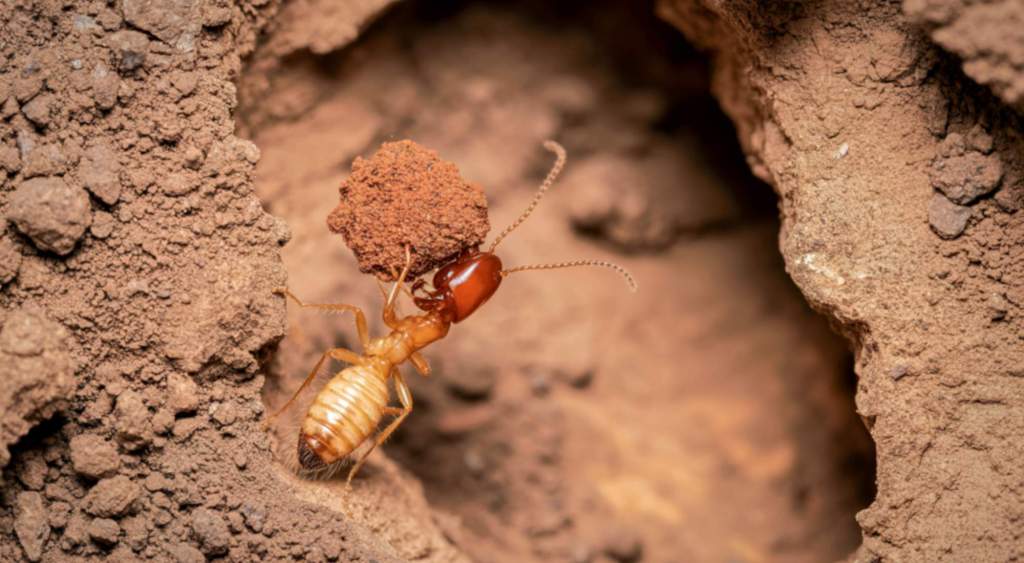
Subterranean termites are among the most destructive termite species in the United States, especially in the Portland-Vancouver area.
They are small, soft-bodied insects that range from creamy white to light brown, with straight antennae and a thick waist. Swarmers are darker in color and have two pairs of equal-length wings that extend past the body. Because they dehydrate easily, subterranean termites live in large colonies underground where moisture levels remain stable.
These termites build mud tubes along foundations, crawl space walls, and structural supports to travel between the soil and wood while staying protected from light and dry air. They feed on structural lumber, subflooring, and other cellulose materials from the inside out, often leaving only a thin outer surface intact.
Their colonies can contain hundreds of thousands of individuals, allowing damage to progress quickly if left untreated.
How We Treat Subterranean Termites
- Foundation and soil inspection: Examine slab joints, crawl spaces, support piers, expansion cracks, and exterior foundation walls for mud tubes and soil contact points, paying attention to structural wood near ground level to detect hidden feeding and moisture-prone areas where colonies gain access.
- Soil and structural treatment: Apply professional termiticides to the soil around the foundation to create a protective barrier between the colony and the structure. When needed, treat wall voids and damaged wood where active feeding is confirmed to stop movement inside the home.
- Long-term monitoring and defense: Subterranean termites live underground in large colonies; continuous protection is essential. Ongoing inspections and preventative treatments help detect new activity early and maintain a strong barrier against reinfestation.
The Antworks Approach to Termite Control
At Antworks Pest Control, we take a comprehensive and targeted approach to termite control, ensuring effective elimination and long-term protection for your property. Here’s a quick breakdown:
- Expert Inspection: Our skilled technicians conduct thorough termite inspections to identify the extent of the infestation and locate termite colonies.
- Customized Treatment Plans: Based on the inspection results, we develop tailored treatment plans to address your specific termite problem, using industry-leading techniques and products.
- Targeted Extermination: Our precise extermination methods target termite colonies, ensuring effective elimination and preventing further damage to your property.
- Preventive Measures: Beyond extermination, we implement preventive measures to create a termite-resistant environment, protecting your property in the long term.
Effective Termite Control & Extermination Services at Antworks
If you see any signs of a termite infestation in your home or business, don’t wait. Call Antworks Pest Control. We are proud to offer comprehensive termite extermination, control, and removal services without the hassle of binding contracts.
Safeguard your property today. Contact us for a free estimate and schedule your termite inspection today.
Pest Control Serving the Pacific Northwest
Family-owned pest control company for homes and businesses across Portland, Vancouver, and surrounding Pacific Northwest communities. No required contracts. Long-lasting results.
Frequently Asked Questions About Termites
Why Did Termites Target My Property?
What many homeowners and business owners don’t realize is that there has to be something causing a termite infestation. In fact, once the source is determined, it’s far easier to address reasons why you have termites and to get rid of the pests once and for all.
Some reasons you may have termites include:
- Standing water: Moisture attracts termites. They build colonies in the soil in moist areas of a yard around a home or business’s foundation.
- Openings in the foundation, walls, and roofs: Termites seek moisture and food to survive. That’s why they find ways into a home or business through cracks, crevices, and holes.
- The state or region of residence: Some states and regions are warmer and wetter than others. That means the likelihood of termites increases. There isn’t much a person can do to prevent termite infestations other than removing sources of standing water and taking care of necessary house or business repairs.
Can I Prevent Attracting Termites Before They Appear?
While termites can show up despite the best maintenance, there are a few things you can do to minimize your risk.
Some ways you can be proactive about termite prevention include:
- Eliminate standing water
- Plug up any holes in foundations, doorways, and windows
- Get rid of wood that is left in a yard or near a structure
- Seek the help of professionals who know exactly how to get rid of termites for good
Antworks is a valuable resource because our employees are trained to handle pests, such as termites. Reach out today to get your termite inspection.
What Are Common Warning Signs of a Termite Infestation?
Termites are arguably a homeowner’s worst nightmare. These wood-damaging pests will feed on beams, cabinets, floors, and other wooden elements in your home, leading to severe structural damage if left unchecked.
If you notice any of the following signs that termites are in your home, contact Antworks immediately to help prevent any major damage.
- Discarded Wings
- Mud Tubes
- Damaged Wood
- Termite Droppings
- Clicking Sounds
- Hard-to-Open Windows and Doors
- Warped Flooring
Can I Stay Home During Termite Treatment?
Yes. Antworks is committed to using professional-grade products that are also proven to be safe for pets and children, so you can go on with your normal schedule without disruption.