
Hornet Exterminator Serving Portland, OR and Vancouver, WA
Antworks pest control is a stinging insect exterminator serving the greater Portland-Vancouver area for over 20 years. Dealing with a hornet issue at your home or business? Antworks Pest Control understands the challenges these pests can pose to your family, pets, and property. Hornets, known for their aggressive nature and painful stings, often create nests in areas like porches, garages, and sheds.
At Antworks, we specialize in swift and safe hornet extermination, control, and removal in the Vancouver-Portland area, ensuring the well-being of your loved ones. Our tailored treatments address the unique characteristics of your property, targeting hornets’ attraction to sugar, sap, and protein. We recognize the importance of preserving the ecosystem, especially considering the threat hornets pose to essential pollinators like bees.
If you’re facing a hornet issue, don’t wait. Call us today for a free estimate. Moreover, choosing Antworks Pest Control means you won’t be tied down with long-term contracts – our focus is on your safety and satisfaction. Reclaim your space and peace of mind with Antworks!
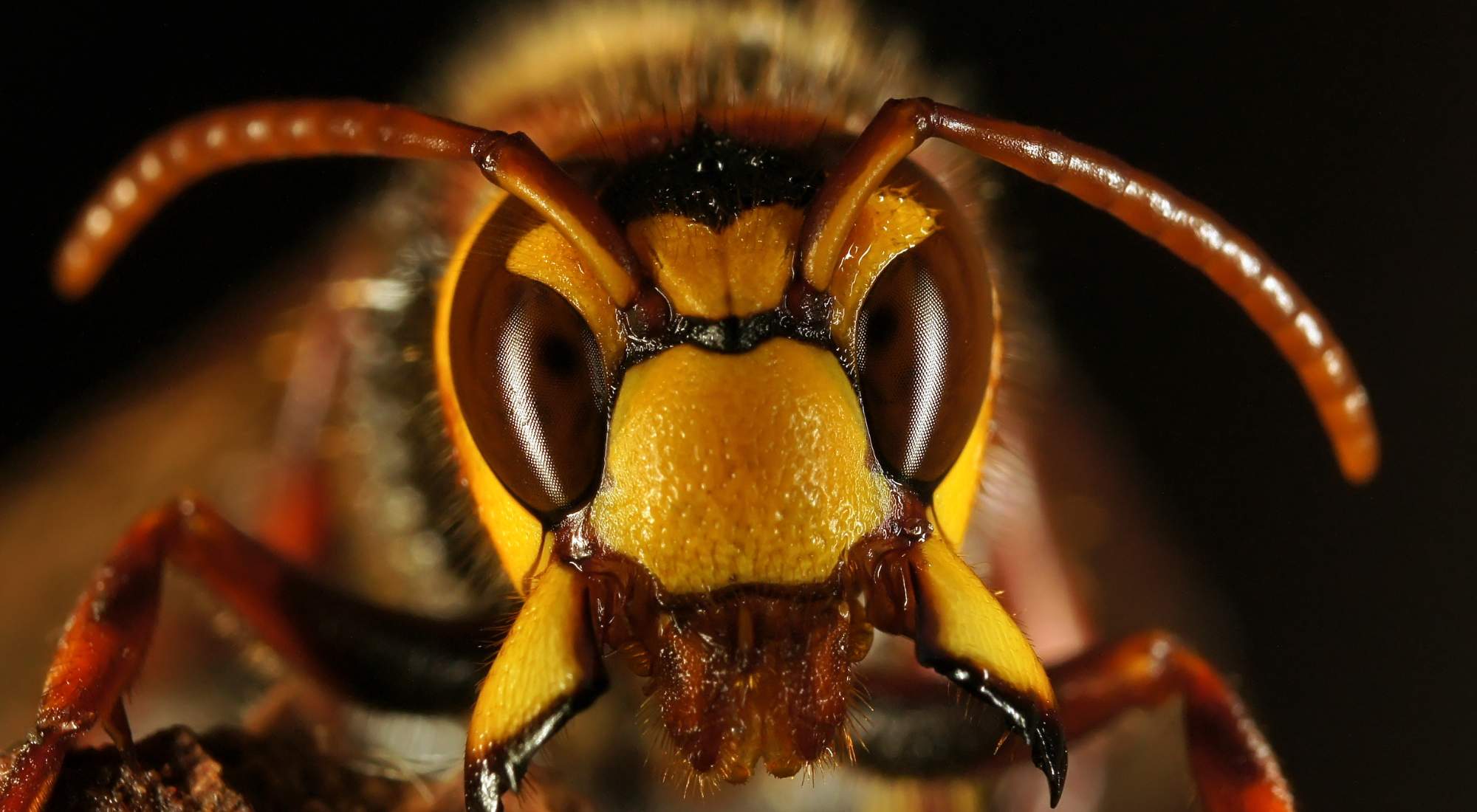
The Dangers of Hornets
Hornets, with their aggressive nature and potent stings, pose significant risks to people and the environment. Understanding these dangers is crucial for prompt and effective hornet control and removal.
Here’s what makes hornets a threat:
- Stinging Hazards: Hornets are known for their painful stings, which can cause severe reactions, especially in individuals with allergies. Agitated hornets defend their nests vigorously, making encounters potentially dangerous.
- Allergic Reactions: For those with severe allergies to hornet venom, stings can lead to life-threatening anaphylaxis. Prompt medical attention is essential in such cases.
- Nest Locations: Hornets often build nests near human activity, such as porches, garages, and sheds. Their nests can go unnoticed until a threat arises, increasing the risk of stings.
- Aggressive Behavior: When hornets feel threatened, their aggressive response can escalate quickly. Disturbing a nest or even approaching too closely can trigger an attack.
- Impact on Bees: Hornets are predators of bees, essential pollinators in the ecosystem. An unchecked hornet population can pose a threat to local bee populations and disrupt the delicate balance of the environment.
Common Hornets, Wasps, and Stinging Insects in the Pacific Northwest
In the Pacific Northwest (PNW), several types of hornets and stinging pests can be encountered. Here are the most common species in our area:
Bald-Faced Hornet
What Are Bald-Faced Hornets?
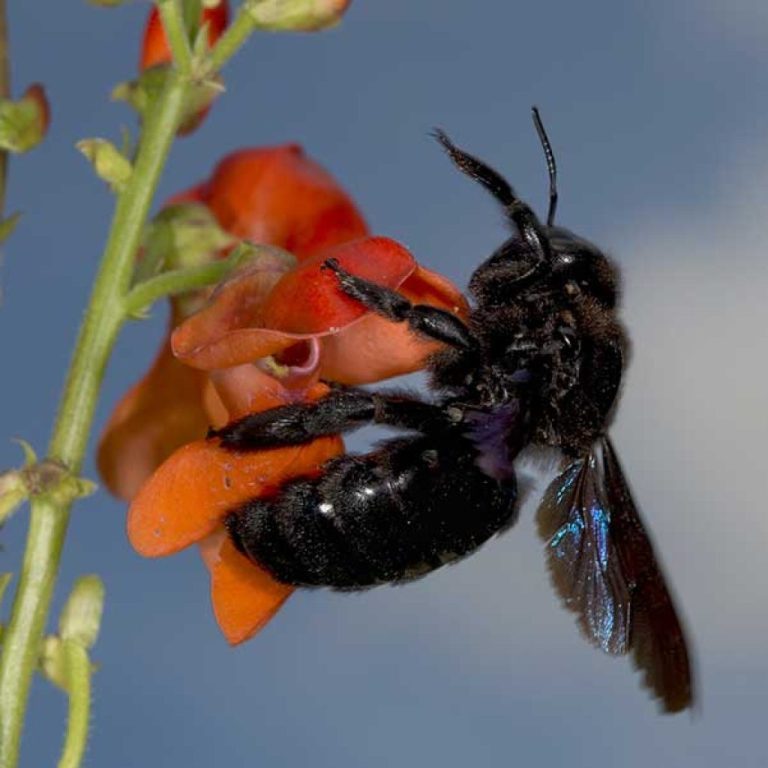
Bald-Faced hornets are large and can be aggressive. They are black in color and range from 1 to 1½ inches long. Bald-Faced hornets are much thicker in stature than Paper Wasps and have two body sections with one pair of wings.
These hornets are considered to be not quite as aggressive or difficult to control as Yellowjackets, but they are still regarded as dangerous due to the size of the insect and relatively more intrusive sting.
A Bald-Faced Hornet nest will typically be in a tree or shrub and be a classic, oval shape. The nests are made of paper (a solution of insect saliva and chewed material) and have several tiers of eggs inside. These nests are usually about the size of a basketball by the time they are noticed by anyone and are likely to be found in rhododendron bushes. The entry/exit hole is usually at the apex or at the bottom of the nest structure. There are usually between 60 and 100 hornets in a nest the size of a basketball.
How We Treat Bald-Faced Hornets
- Nest and flight-path inspection: Locate aerial paper nests in trees, shrubs, eaves, overhangs, and utility structures. Identify active flight patterns and high-traffic areas around entryways, decks, and yard spaces.
- Targeted nest treatment and removal: Apply professional-grade products directly to the nest during low-activity periods, then safely remove or neutralize the structure once activity has ceased. Treat surrounding attachment points and nearby voids to discourage rebuilding.
- Ongoing prevention: Bald-faced hornets are most aggressive in late summer when colonies peak. Routine exterior inspections during the warmer months help detect early nest development and reduce the risk of large, established colonies.
European Hornet
What Are European Hornets?

European hornets are one of the largest wasp species found in the United States and can be especially noticeable due to their size and loud, buzzing flight. They typically measure up to 1.5 inches long, with reddish-brown heads and thoraxes, yellow and black striped abdomens, and amber-colored wings.
Unlike many other stinging insects, European hornets are active both day and night and are often attracted to lights after dark, which can bring them close to homes.
Behaviorally, they build large paper nests inside wall voids, hollow trees, attics, barns, and other protected cavities rather than exposed hanging nests. Colonies grow throughout spring and summer, reaching peak population in late summer and early fall. While they are not typically aggressive away from the nest, they will defend it forcefully if disturbed.
How We Treat European Hornets
- Structural nest assessment: Inspect wall voids, attics, soffits, barns, and hollow trees where European hornets commonly establish hidden paper nests. Monitor evening activity around exterior lighting, since this species is active after dark and often drawn to illuminated areas.
- Precision nest treatment: Apply targeted products directly into wall voids or nesting cavities during reduced activity periods, ensuring the entire colony is addressed. Once inactive, we seal or repair access points to prevent re-entry and future nesting in the same void.
- Seasonal monitoring: Colonies expand through summer and peak in late season. Proactive inspections during warm months help identify early nesting activity before populations grow large and become more defensive.
Carpenter Bees
What Are Carpenter Bees?
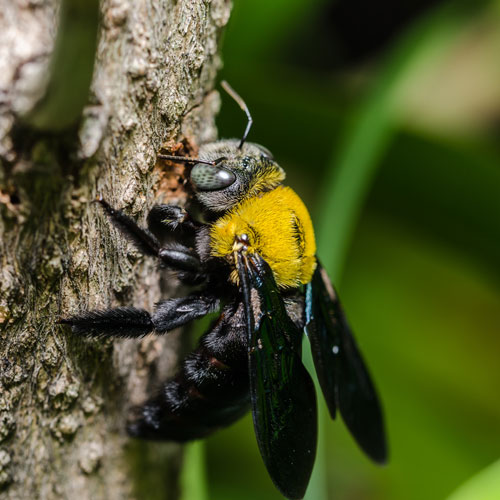
Carpenter bees are large, robust bees often mistaken for bumblebees, but they can be identified by their smooth, shiny black abdomens rather than the fuzzy, yellow-striped look of bumblebees.
In the Pacific Northwest and many other regions, they are commonly seen hovering near wooden decks, eaves, fascia boards, fences, and outdoor furniture in spring and early summer.
Males are territorial and may fly close to people, but they do not have stingers. Females can sting, though they rarely do unless directly handled.
Carpenter bees do not build exposed hives. Instead, females bore perfectly round holes into untreated or weathered wood to create nesting tunnels where they lay eggs. Over time, repeated nesting can lead to structural damage, especially when the same areas are reused year after year. Their activity often attracts woodpeckers, which can cause additional damage as they search for larvae inside the wood.
How We Treat Carpenter Bees
- Wood-damage inspection: Examine decks, fascia boards, eaves, railings, sheds, and other exposed wood surfaces for perfectly round entry holes, sawdust beneath openings, and staining from repeated tunneling activity.
- Targeted gallery treatment and repair: Apply safe, professional products directly into active bore holes to eliminate developing larvae inside the tunnels. After treatment, seal and reinforce damaged wood to prevent reuse and discourage new drilling in the same area.
- Preventative protection: Activity ramps up in spring as adults begin nesting. Early-season inspections and protective treatments on vulnerable wood surfaces help reduce repeat damage year after year.
Mud Daubers
What Are Mud Daubers?
Mud Daubers are fairly common in parts of the Northwest. They are solitary (they do not live in colonies), non-aggressive, and look sort of like Paper Wasps in their basic body structure. They have two body sections, but they also have a long, string-like waist section that distinguishes them from Paper Wasps. They come in many different colors, but are usually black and yellow.
Late summer is when mud daubers cause the most problems. The colonies have increased, and the population may be outstripping the natural food supplies. As a result, these wasps are particularly attracted to fruits, sweets, and decaying matter. They can be found around garbage cans, on or around fruit trees, and, most annoyingly, at your outdoor meal. Bright clothing and perfumes can also attract late-season wasps.
As nests are only used once, it may be best to ignore them unless they are located in your house or an outdoor area that you frequently use. Nests in houses should be removed because they can serve as bases for other household insects (such as carpet beetles and other pests).
How We Treat Mud Daubers
- Nest identification: Inspect eaves, porch ceilings, garages, sheds, and exterior walls for tube-shaped mud nests attached to protected surfaces. Check for repeat building in quiet, undisturbed areas around the structure.
- Nest removal and spot treatment: Carefully remove mud tubes and treat attachment points to address any remaining activity. Clear out old nests to prevent secondary pests from occupying abandoned chambers.
- Ongoing prevention: Mud dauber activity increases in warmer months. Routine exterior inspections and light preventative treatments help discourage new nest construction in high-use areas around the home.
Paper Wasps
What Are Paper Wasps?
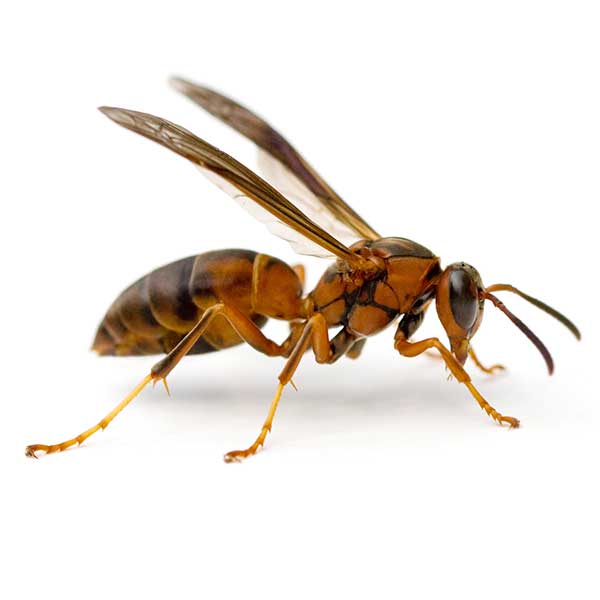
Paper Wasps are the most docile of the three main social species. They tend to only become problems when they build their umbrella-shaped nests directly over doorways or other areas (such as under a picnic table) where close human interaction cannot be easily avoided.
The nests, in which the egg cells open downward, usually contain 15 to 50 cells. These wasps are long-legged, elongated, and slender-waisted. To the casual observer, they may appear to be black but are most likely golden brown, or darker, with large red or yellow patches. As they are not usually aggressive and are beneficial (helping to control fruit-destroying insects and flies), eliminating the nests is usually not necessary.
How We Treat Paper Wasps
- Colony detection: Carefully examine eaves, soffits, porch ceilings, window frames, railings, and outdoor fixtures for open, umbrella-shaped paper nests. Pay close attention to sheltered overhangs and high-traffic entry points where paper wasps commonly build.
- Nest removal and treatment: Apply professional products directly to active nests during low-activity periods, then safely remove the comb once the colony has been eliminated. Treat surrounding surfaces where rebuilding is likely.
- Seasonal prevention: Paper wasp colonies begin forming in spring and expand through summer. Early detection and routine exterior service help prevent small starter nests from becoming larger, defensive colonies.
Yellow Jackets
What Are Yellow Jackets?

These are the smallest of the common social wasps. They are relatively short and stout compared with other wasps. They are either yellow-and-black or white-and-black and are aggressive.
Yellowjackets can be divided into ground nesters (frequently using old rodent holes) and aerial nesters. However, they are also found in concealed areas such as wall voids, crawlspaces, and attics. Locating the nest (typically through flight pattern analysis) is essential to eliminating them.
How We Treat Yellow Jackets
- Nest location and activity tracking: Inspect ground areas, landscape beds, retaining walls, crawl spaces, and wall voids for concealed nests. Watch for steady in-and-out flight patterns near soil openings, siding gaps, or foundation cracks where yellow jackets commonly enter.
- Direct colony treatment: Apply professional-grade products into ground burrows or structural voids during low-traffic periods to eliminate the colony at its source. Once inactive, address entry points and nesting cavities to prevent re-establishment.
- Seasonal control strategy: Colonies expand rapidly through summer and become more aggressive in the late season. Routine inspections and preventative perimeter treatments help reduce the risk of large, established nests around the home.
Frequently Asked Questions About Hornets, Wasps, and Other Stinging Insects
How Can I Prevent Hornets From Invading My Property?
Periodically walk around the premises and check for areas that might attract hornets to nest.
Examples include:
- Broken or cracked siding
- Soffit imperfections, such as gaps or cracks
- Improperly working doors and windows
- Holes in the ground
- Repair any areas that could provide a place for a hornet nest to be built.
- Fill any holes with dirt, packing it tightly.
Can I Remove a Hornet Nest Myself?
DIY removal can be risky, especially with large or hidden nests. Hornets can sting multiple times and may swarm when threatened.
Professional treatment focuses on eliminating the entire colony safely and preventing re-nesting, particularly when nests are inside structures or high off the ground.
Is Treatment Safe for My Family and Pets?
Yes. Antworks products are applied in targeted areas such as nests, voids, and entry points, not broadcast across living spaces. We use products that are proven to be safe and follow strict application guidelines to ensure treatments are effective while minimizing risk to people and pets.
What if the Nest Is Inside My Wall?
When hornets or wasps nest in wall voids, we treat directly into the cavity through the entry point or a small access opening. Proper treatment is critical to avoid driving insects further into the structure.
Don’t Take a Chance With Hornets. Call Antworks for Hornet Removal!
When it comes to hornet control and removal, the experienced team at Antworks Pest Control has you covered. With over 15 years in the business, we bring unparalleled expertise to safely eliminate hornet threats from homes and businesses in the Vancouver-Portland metro area.
Why Choose Antworks for Hornet Removal?
- Expertise: With over 15 years of experience, our skilled technicians understand the behavior of hornets, ensuring precise identification and safe removal.
- Free Quotes: Worried about the cost? We offer free quotes, allowing you to make an informed decision without any financial surprises.
- Convenient Location: Serving the Vancouver-Portland metro area, our local presence allows us to respond swiftly to your hornet removal needs.
- No Contracts, No Worries: At Antworks, we believe in providing effective solutions without tying you down. Say goodbye to long-term contracts and hello to hassle-free hornet removal.
Call us today to speak with one of our professionals!